Culture
The Unnamed Masters
On the word that has been quietly diminishing Africa's most skilled makers, and what we owe them instead.In Murano, the island off Venice where glassblowing has been practised since 1291, the men who
Folasade Ademola · 16 April 2026
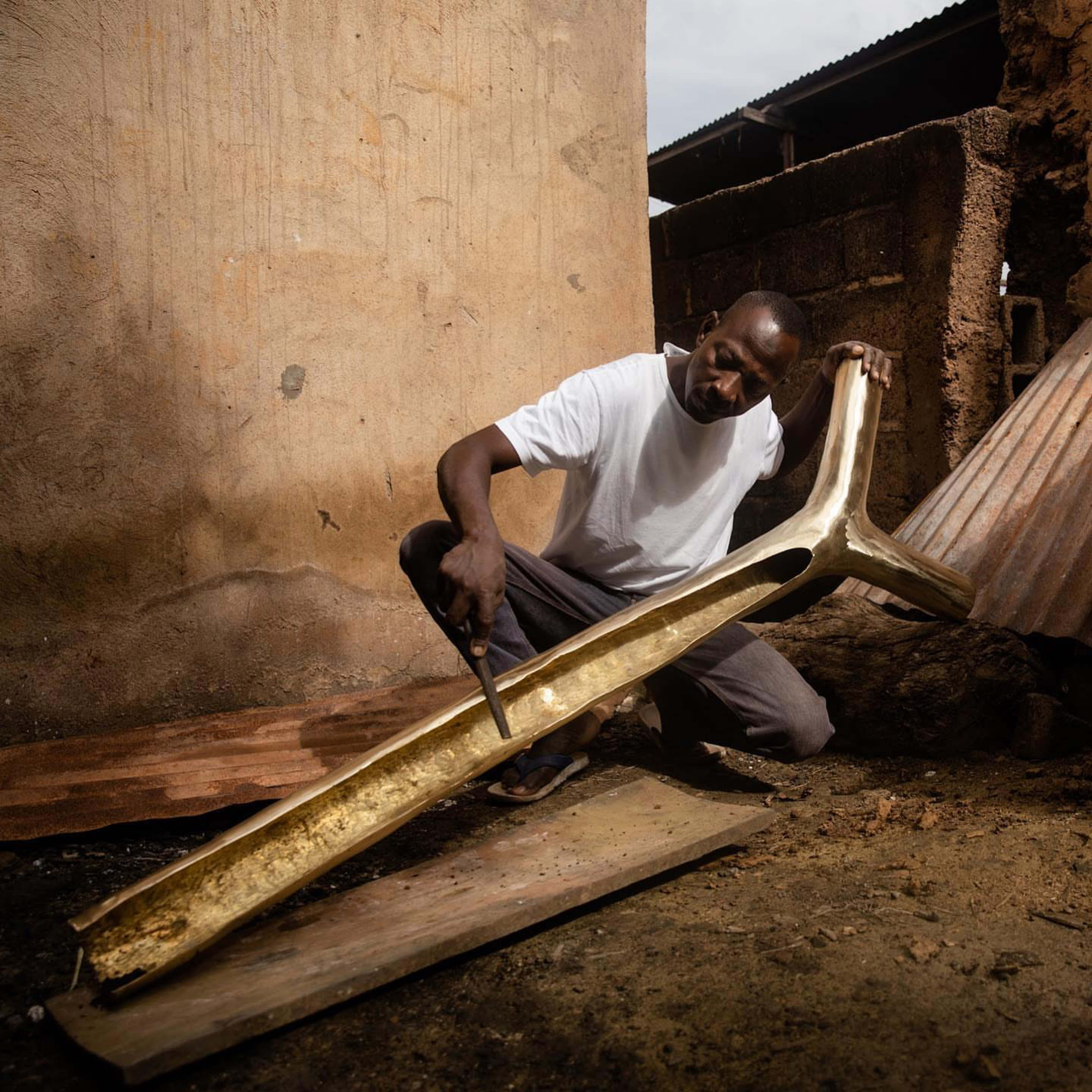
In Murano, the island off Venice where glassblowing has been practised since 1291, the men who work the furnaces are called maestri. The title is not honorary. It is a formal designation that carries legal protections, economic rights, and social standing. A Murano maestro cannot simply be replaced by a cheaper pair of hands. The knowledge he holds, built over decades of daily practice, is recognised by the state as a form of national heritage. It is protected accordingly. In Japan, the government maintains an official register of Living National Treasures: individuals designated as holders of Important Intangible Cultural Properties. The list includes lacquerware makers, textile dyers, ceramic artists, and metalworkers. The designation comes with a government stipend, institutional documentation of their techniques, and an obligation to pass the knowledge on. The state understands that what these people know cannot be replicated by a machine, sourced from a supplier, or recovered once it is gone. So it acts accordingly. In West Africa, a man who has spent forty years learning the vocabulary of kente, whose knowledge of the cloth's symbolic language is as precise and as complex as any written text, is called an artisan. The word is doing quiet damage. What the Word Does Artisan is not a neutral description. It carries a specific weight in the global cultural and commercial economy, and that weight positions the maker as a skilled labourer rather than a primary author. The distinction determines everything that follows: how the work is priced, who owns the intellectual property in the pattern, whether the maker's name appears anywhere near the finished product, and whether any institution feels a responsibility to protect what they know. A luxury brand in Milan commissions a textile inspired by Asante kente. The commission goes to a factory. The original weaver, whose ancestors developed the vocabulary the design was drawn from, receives nothing. Not because anyone decided to steal from him. But because the structures that would have made him an author rather than a supplier, the ones that would have put his name on the pattern, registered his knowledge as intell…