Art & Design
The Invisible Labor Behind Art, Culture, and Beauty.
A sit down with Sosa Omorogbe on the work that disappears so art can speak.
Fatimah Sagir · 23 February 2026
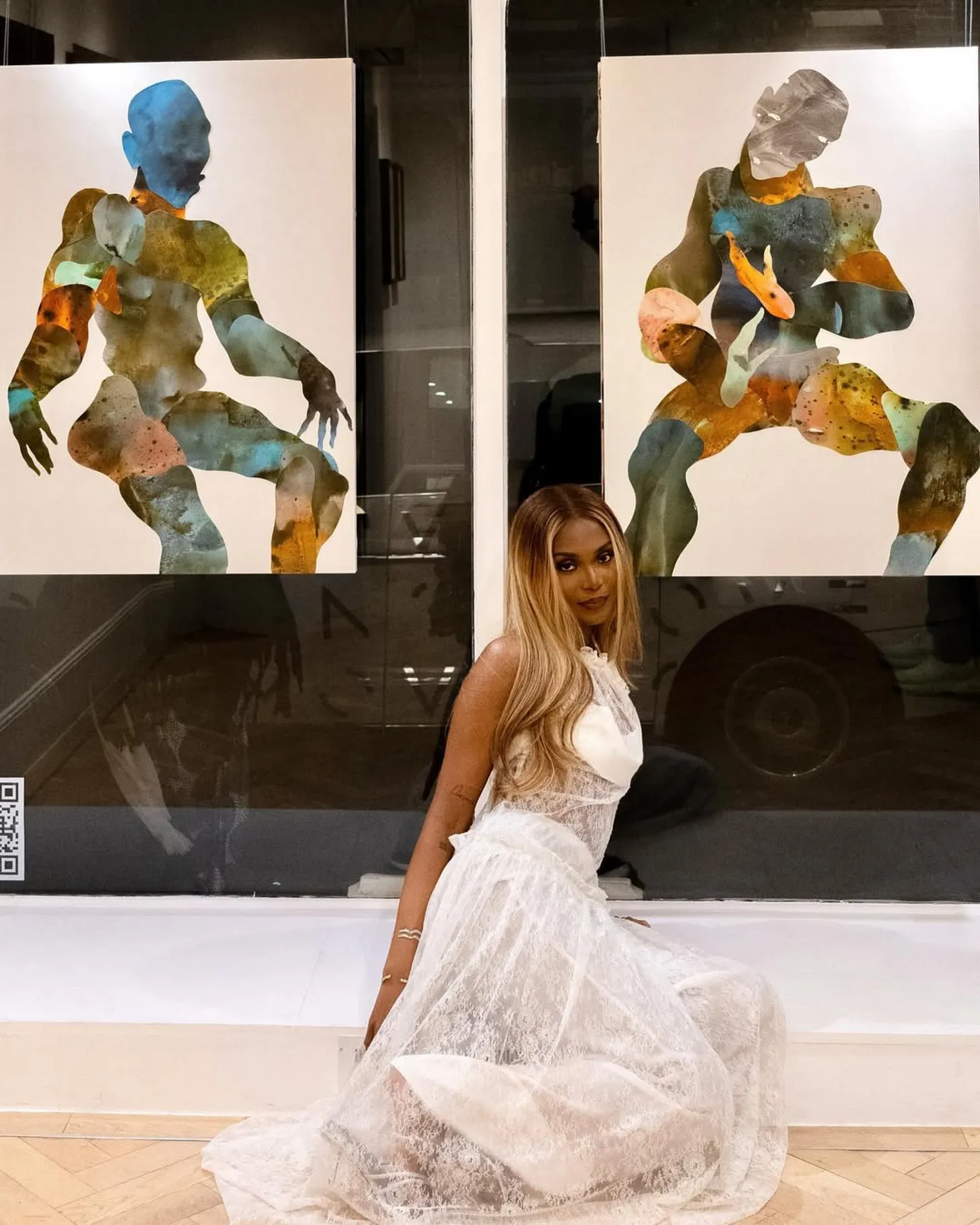
People tend to think exhibitions are seamless. They’re not. Behind every exhibition — even the smallest, most restrained one — is an invisible architecture of labour: drilling, lifting, shipping, customs clearance, framing, last-minute fixes. The audience walks into a room that feels put together and beautiful, unaware that the works may have cleared customs that very morning, or that the smell in the space has been carefully engineered to mask fresh paint.This gap between appearance and reality is where Sosa Omorogbe lives and works. Sosa Omorogbe. Omorogbe is a curator, gallerist, and art advisor, and the director of 1897 Gallery. When we spoke, she was preparing to fly to Abu Dhabi for Abu Dhabi Art — excited, exhausted, grateful. The familiar routine of cultural work: intensity followed by momentum, momentum followed by more intensity. What she does, at its core, is translation. “I translate ideas,” she says. “I answer questions that people have — or have never even thought to have.” For Omorogbe, curation is not decoration. It is bridge-building: between the past and the present, between Africa and the world, between artists and collectors, and between artists and audiences. It is stewardship, storytelling, and world-building, all at once. Exhibition by 1897 Growing Up with Art, Not Around It Omorogbe’s relationship with art is not abstract. It is familial. Her mother’s family is from Benin City, traditionally bronze casters. In Edo households, she says, artifacts are not museum pieces — they are part of daily life. African art was always present, always normal. Contemporary African art entered her consciousness later, during her final year of university, when she began noticing the prices Nigerian artists were commanding. Something was happening, and she wanted to understand it. A trip to Italy sharpened that curiosity. Watching how Italy treats its art and historical artifacts forced a comparison: where are Nigeria’s works kept? In what condition? What role could art play in shaping cultural pride? That trip clarified something fundamental for her: art is a vehicle — of history, culture, and memory. And stewardship matters. Benin remains her starting poin…