Wealth
African Cultural Power Is Worth Billions. We Have Yet to Send the Invoice.
An exploration of Ibrahim Mahama, the African art value gap, and how a new generation of creators is shifting from cultural influence to ownership, infrastructure, and long-term wealth.
Anthony Ameh · 1 April 2026
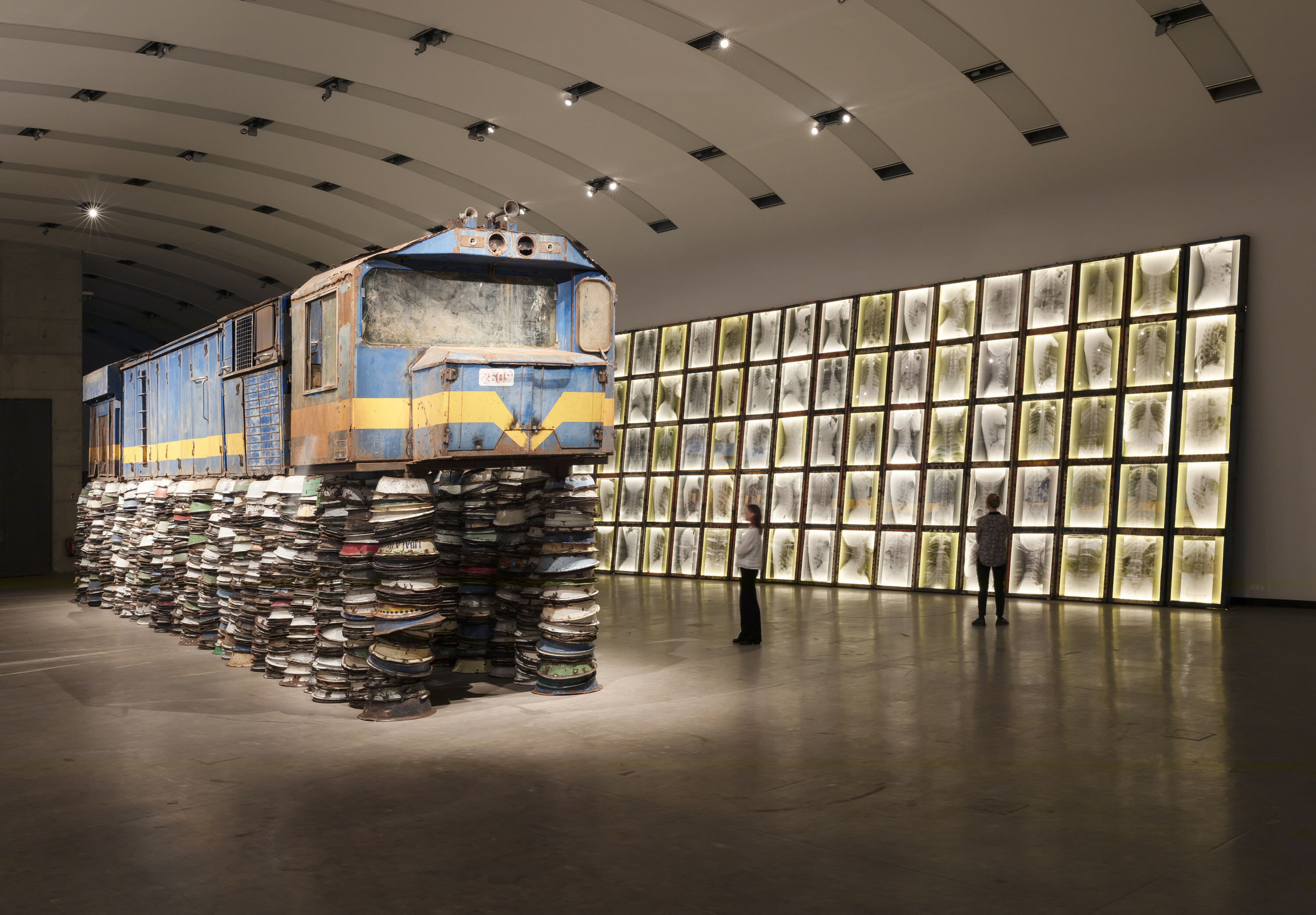
The planes did not arrive by sky. They arrived on the back of flatbed trucks, crawling through the dust of the Northern Region of Ghana, stripped of their engines and their histories as Soviet-era transporters. To the villagers in Tamale, they were metal ghosts. To Ibrahim Mahama, they were the first line of an invoice that the world had been owing for a long time. Mahama, arguably one of the most successful artists of his generation, does not speak in the urgent, breathless vocabulary of the "creative economy". He speaks the language of stewardship . While the global art market was busy pricing his large-scale jute-sack installations, works that interrogate labor, trade, and the movement of African value—Mahama was busy moving that capital back into the soil. This is what sending the invoice looks like when it moves past the metaphorical. It changes from being a press release to becoming an institution. In Tamale, at his Red Clay Studio, those planes have been converted into classrooms and cinemas. Here, the Value Gap is not a theoretical problem discussed in Paris boardrooms; it is a structural reality being dismantled by a man who understands that if you do not author the archive, you are merely a tenant of your own talent . We have spent the last two decades celebrating the "Atmosphere" of African culture Watching as the syncopated rhythms of Lagos and the silhouettes of Dakar became the background noise of global luxury. It has been a period of immense visibility, yet curiously little architecture. We have been the world’s most influential suppliers of "cool," providing the raw material for mood boards from Milan to Manhattan, while the proprietary rails—the labels, the galleries, and the digital distribution networks, remained elsewhere. To live in this era is to inhabit a paradox: to be everywhere and yet to own so little of the "afterlife" of one’s work. Recognition has arrived, but recognition is a polite form of debt ; it is a nod across a crowded room. Ownership, however, is a seat at the ledger. To understand the invoice, one must first understand the nature of the leakage. For a generation, African creativity has functioned as a global utility—a sou…