Art & Design
Look Twice: The Stephen Tayo Philosophy
"Without colour, the garment stops looking like a costume. It begins to look like light."
The Leisurely Life Admin · 18 September 2026
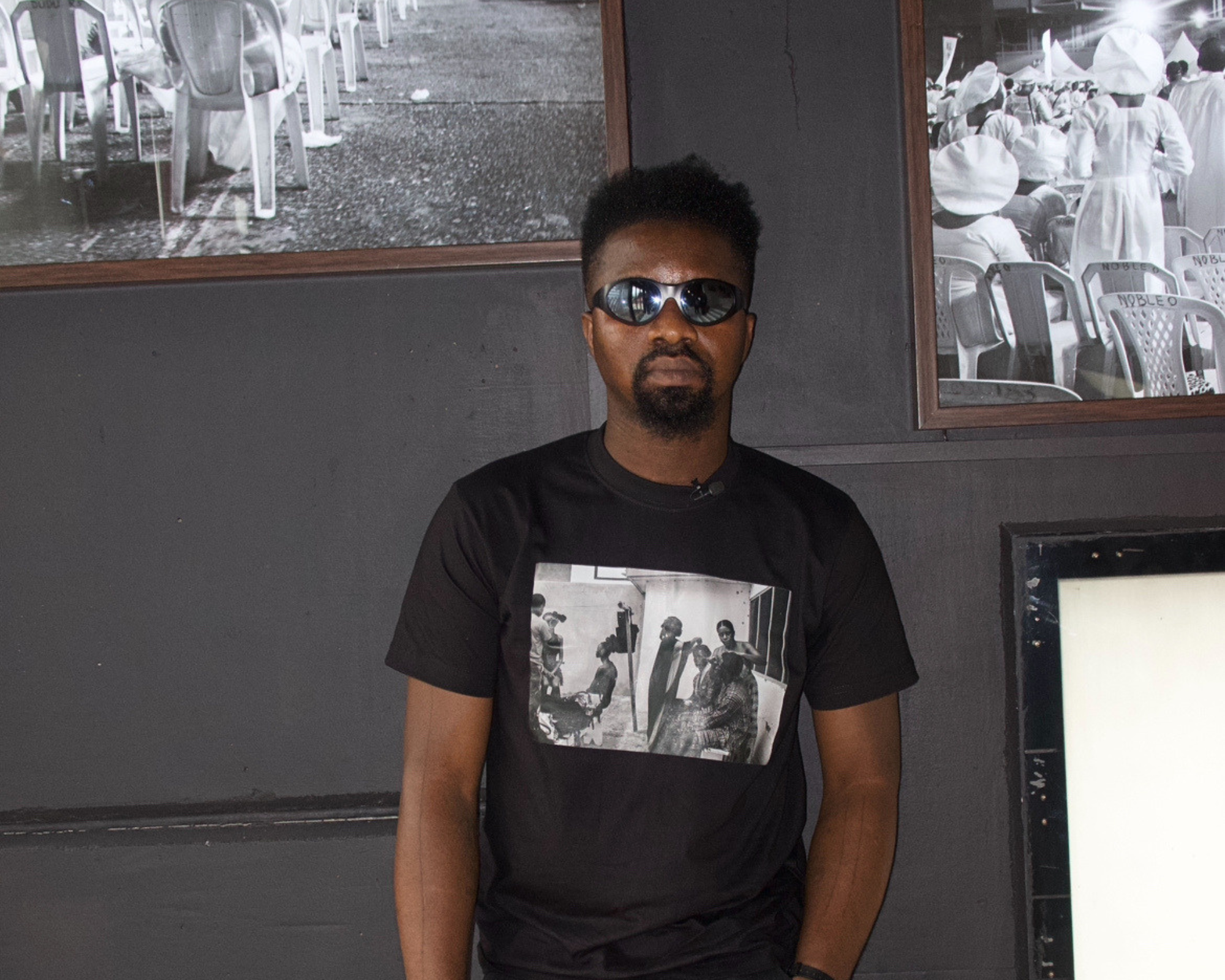
Stephen Tayo has spent years photographing Nigeria's white-garment churches for What Comes to Mind When You See the Garment? , now showing at Alára in Lagos. At the heart of the exhibition is a simple invitation: slow down and look again. Stephen would like you to take your time. Come to the exhibition, he says, sit with the work, then return and look again. Take a second look, then a third. Nothing worth seeing, in his experience, reveals itself all at once. That patience runs through What Comes to Mind When You See the Garment? , an exhibition he has spent years building, now installed at the top of a staircase at Alára in Lagos. Along its white and dark walls, a father holds his son by the arm. A mother rests a hand on her young daughter. A preacher leans towards his brother. A woman walks through a shopping mall. Children scatter in the middle of a game, blurred by their own movement. Everyone is dressed in white. The White Garment The white is the point. It is the flowing garment worn by members of Aladura churches. The word means "people of prayer" and refers to a Christian movement that emerged within Yoruba communities about a century ago, bringing Christian worship together with Yoruba traditions of prayer, healing, fasting and visions. For anyone who grew up watching Nigerian television, however, the garment often means something different. For decades, Nollywood used the white-garment church as shorthand for the false prophet and the midnight ritual. Fear became attached to the cloth. Tayo's work tries to loosen that association. The people in his photographs are mothers and daughters, women running errands and children too busy playing to pose. Learning to Look The desire to look again is an artistic device, and it reflects how Tayo believes the world should be approached. He studied philosophy at the University of Lagos and has always wanted to see his thoughts made visible, to take an idea and turn it into something he can picture. The project began in childhood. His mother would tell him not to do something without explaining why. Knowledge was handed down, and questions were discouraged. Tayo grew up curious and slightly contrary. Somewhere along…