Style
The Artisan’s Margin
From Burkina Faso looms to Lagos ateliers: Why Kílẹ̀ńtàr is setting a new standard for the Nigerian fashion industry.
Odunmorayo Ayobami Oke · 6 April 2026
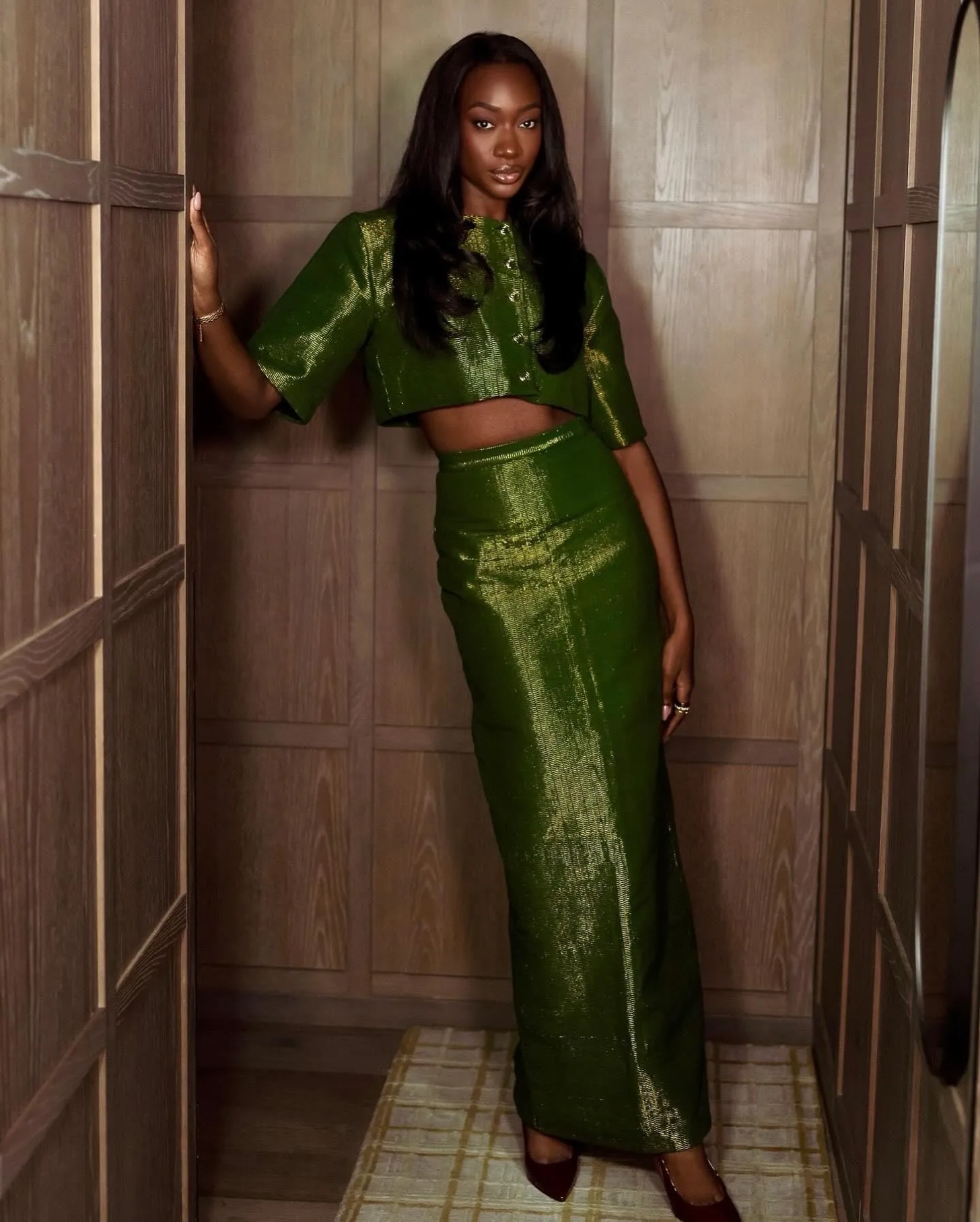
There is a moment Michelle Adepoju describes that stays with you. Burkina Faso, 2018. A translator beside her, a stranger’s car, and an hour driving through a city she barely knew. Then, turning a corner to hear the sound of looms, she perceived the scent of fabric dye in the open air and knew then and there what she was going to build. That moment is inside every Kílẹ̀ńtàr piece. A Kílẹ̀ńtàr garment often enters the conversation through its price tag before anything else. With clothing prices from four hundred thousand naira to over three million naira, most people have the same reaction: a pause, a recalculation, and a quiet question about how a dress can command such numbers. The more precise question, and the one worth sitting on, is what the price actually contains. Kílẹ̀ńtàr sits in a curious place within the Nigerian fashion conversation. The brand is frequently admired for its distinct design language and its use of raffia, fringe, shells, and tassels. It is also discussed, sometimes uneasily, through the lens of cost. But once you follow the garment backwards through the hands that made it, the countries it passed through, and the knowledge embedded in the cloth itself, the price recedes. The brand designs its own fabrics from scratch—a detail that shouldn't be passed over quickly. Unlike most contemporary fashion brands that purchase ready-made textiles from wholesale suppliers, Adepoju designs the cloth before she designs the garment. Some fabrics emerge from weaving traditions in Burkina Faso or Côte d’Ivoire, where artisans work on looms preparing threads that have been harvested, spun, and dyed by hand. Others are shaped by traditional Nigerian textile dyeing practices. The finished cloth then travels again, often back to Nigeria, where the garment is cut, patterned, and assembled. Michelle Adepoju for Forbes 30 Under 30 Europe Art & Culture 2025. Cotton is at the foundation of many Kílẹ̀ńtàr pieces. It is grown, harvested, and separated into threads; spun into continuous strands of yarn; then lowered into natural dyes, chosen deliberately for their low toxicity, where color deepens through repeated immersion. The dyed threads are then set on a…