Art & Design
Great African Art Is Hiding in Plain Sight
A woman in Boston owned a Ben Enwonwu sculpture for sixty years and thought it was worth a hundred dollars. It sold for eighty thousand. This is a story about everything that sits between what an object is and what its owner knows it to be.
Folashade Ademola · 31 August 2026
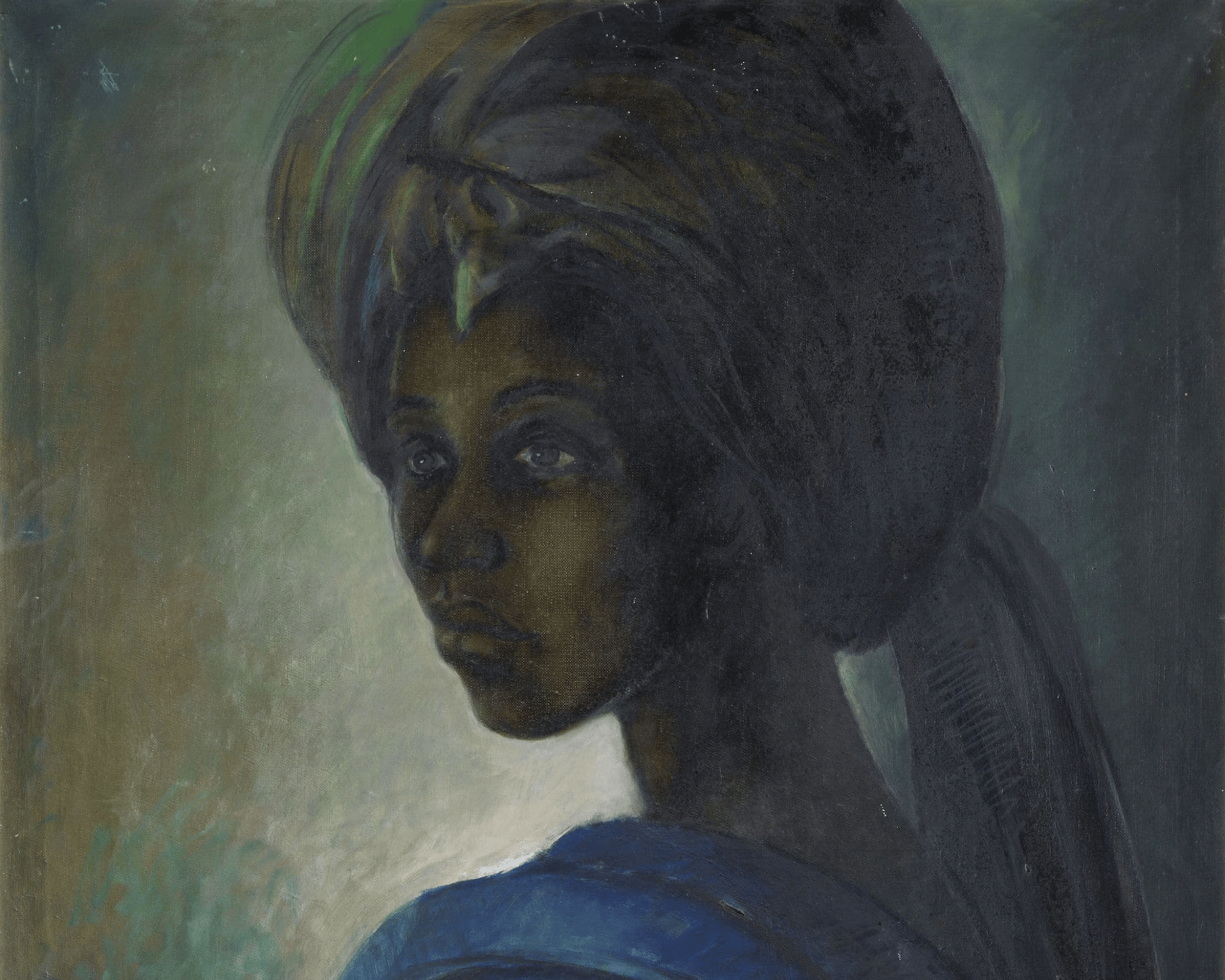
A woman in Boston is ninety-nine years old. On the wall of her sitting room there is a wooden sculpture she has owned for sixty years, since she bought it herself at an exhibition she attended, from the artist who made it. She knows the artist's name. She has kept the work carefully. When someone asks, after all those years, what she thinks it might be worth, she names a figure: fifty dollars, perhaps a hundred. She is wrong by almost eighty thousand dollars. Bust of a Young Boy by Ben Enwonwu The work is a piece by Ben Enwonwu, Nigeria's most significant modernist artist, whose work has sold for over a million pounds at a single auction. It is titled Bust of a Young Boy. Neil Coventry, who has managed Bonhams' Africa desk from Ikoyi for more than a decade, recovered a letter from an archive that placed her at a dinner with Enwonwu in Boston in 1950 and recorded both her name and the name of the piece she bought. He found her grandson through a Google search, sent him a photograph of the work, and asked whether it matched anything in the family. It did. The sculpture is unsigned, as many of Enwonwu's works in wood are, but the chain of evidence is complete. The work goes to auction through Bonhams and sells for almost eighty thousand dollars. She is able to see this happen before she passes. Between what an object is and what its owner knows it to be, there is sometimes a distance of several decades and several hundred thousand dollars. That distance is our subject. Benedict Chukwukadibia Enwonwu Ben Enwonwu was born in Onitsha in 1917, trained at the Slade School of Fine Art in London, and spent the following decades producing a body of work that has still not been fully accounted for. He painted, sculpted in wood and bronze, and exhibited across Europe, the United States, and Nigeria. He was the first Nigerian artist to receive the kind of international institutional recognition that was at that time reserved almost exclusively for European practitioners: Queen Elizabeth II commissioned his portrait in 1956, which he completed in 1957; the British Council sent his work abroad; his name entered the critical vocabulary of mid-century modernism. What was not buil…