Culture
A Review: An African Opera Finds Its Voice in Lagos
Vesta Orchestra's operatic take on Soyinka's The Trials of Brother Jero is thrilling, ambitious and full of promise.
Fatimah Sagir · 12 October 2026
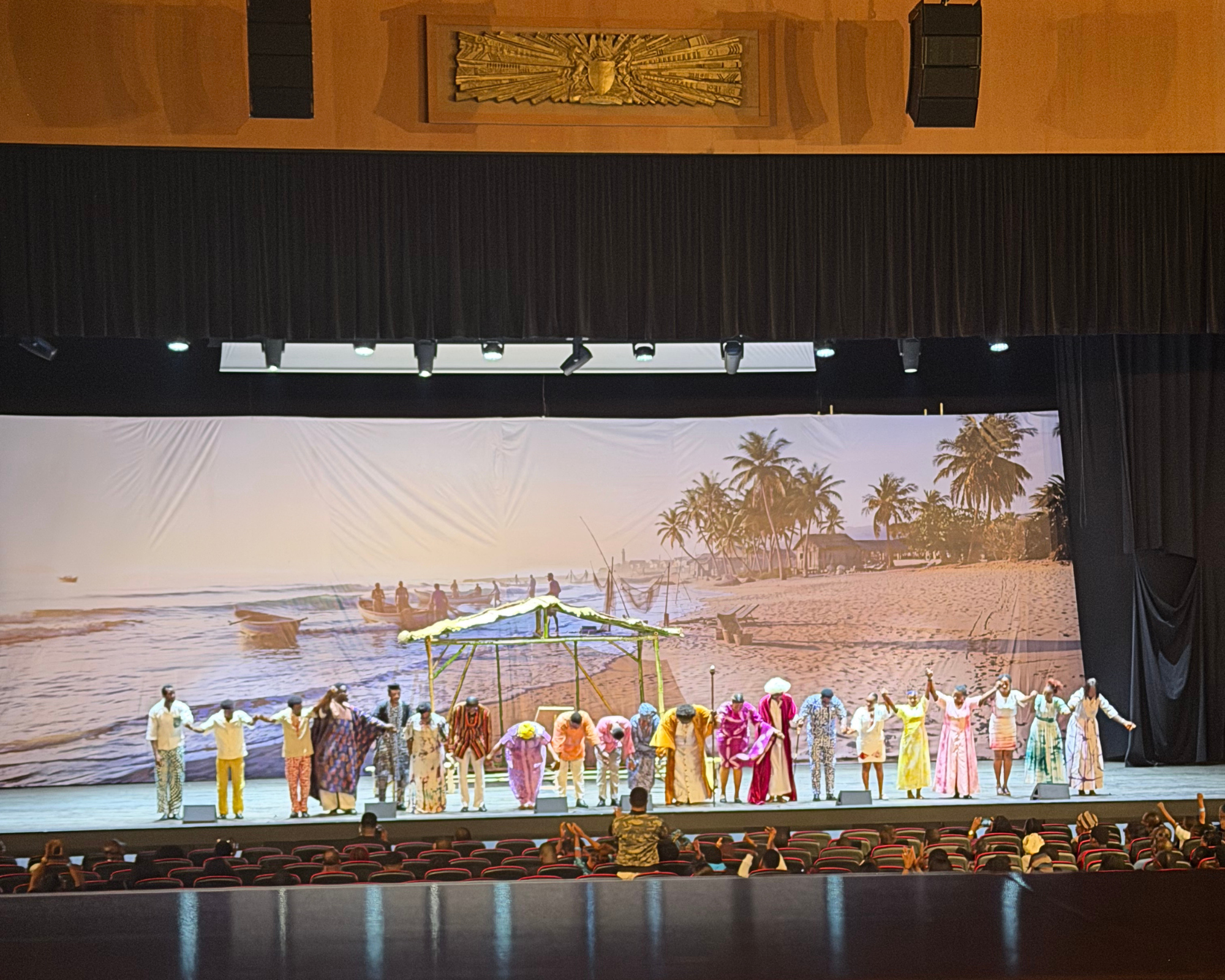
I have sat through a few operas in London, so when I took my seat at Lagos’s National Theatre on 11 October, I wasn’t worried about being bored. I was curious. What would an African opera sound like? What would make it different? The answer arrived with the drums. From the first rhythms rolling out of the Vesta Orchestra, there was an energy you would never find in a European opera house, something close to Afrobeat pulsing beneath the strings and voices. The score, composed by Seun Owoaje, was reportedly built from lines of the original play. That, to me, was one of the production’s greatest achievements, and the orchestra did an exceptional job of bringing it to life. The setting helped set the mood. The renovated National Theatre feels relaxed, intimate and refined, and the audience was not the crowd you might expect: families, couples, even men and women who had come alone. It says something about how Lagos’s social scene is changing. People want something new. The opera itself was adapted from Wole Soyinka’s The Trials of Brother Jero. The story follows a man so devoted to a false prophet that he pours all his money into him, while his wife despairs over their debts and the creditors pile up. Eventually, an old prophet arrives to warn the people that this preacher is not to be followed. That old prophet, sung by Wale Ojo, gave me the moment I carried home. His appearance is brief, but his voice is strong, and his melody stayed with me long after, the way a song you can’t shake keeps replaying. If that aria were on Spotify, I’d stream it. The new prophet, played by Gbolabo Adebakin, has natural stage presence, with moments where his voice truly soared, along with humour that drew real laughter. A passage sung in Yoruba was another highlight. Imagine a whole opera in Yoruba, with more of our culture woven through it. Not everything landed. Sound was the biggest problem, and I wasn’t the only one saying so. Volume rose and fell unpredictably, and the orchestra often drowned out the singers. The second act, especially the long church scenes, dragged and confused me slightly; I knew the false prophet was exposed, but not quite how or why. Clearer storytelling, a…